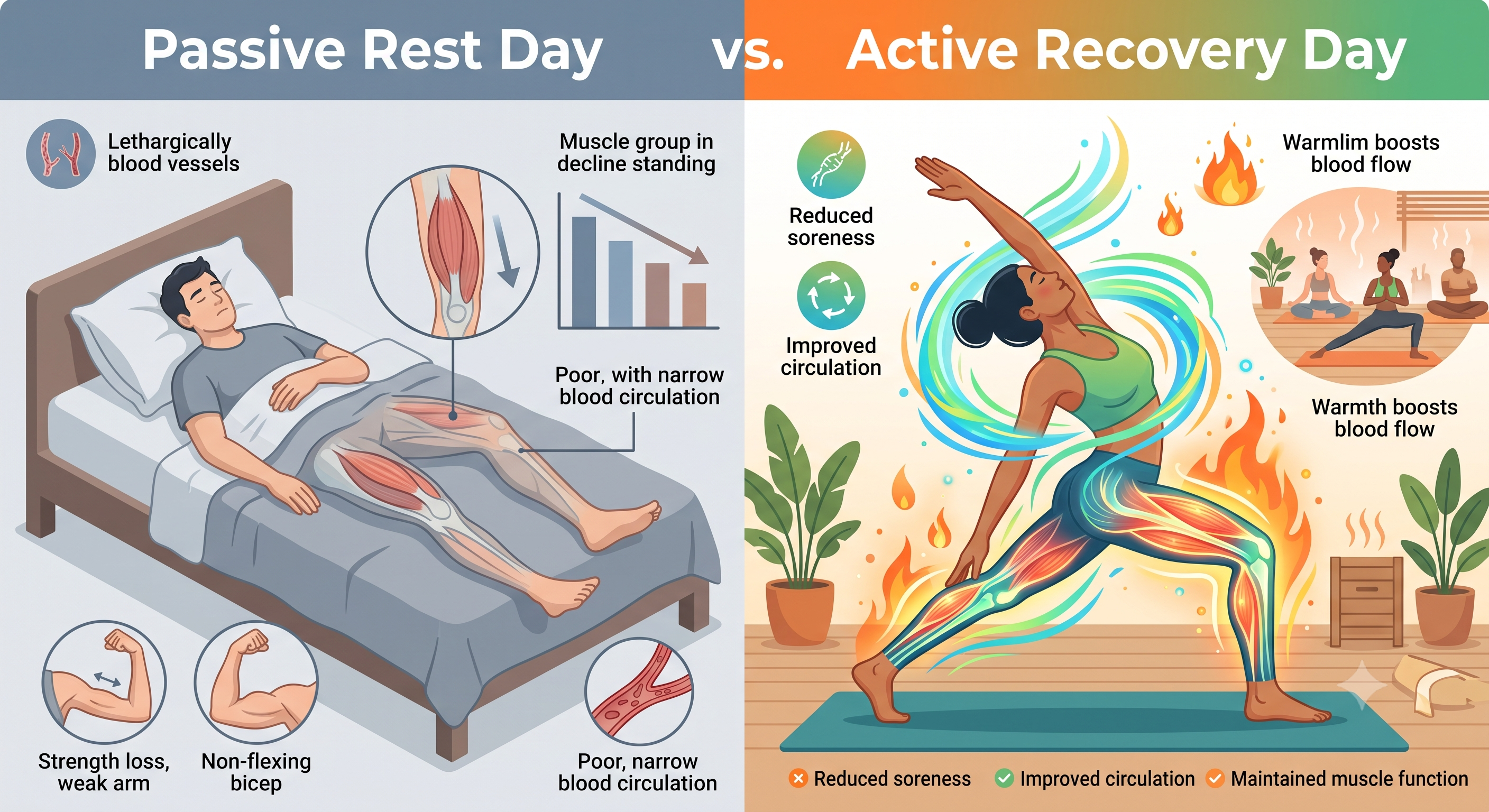
The Science of the Recovery Ride and Run: Why Laziness Slows Your Progress
We have all been there.
You finish a brutal weekend block, a hard race, or a long challenge effort, and every muscle in your body asks for one thing: the couch. You want to park yourself in front of a screen, open a bag of chips, and avoid all unnecessary movement until tomorrow.
It feels earned. Sometimes, full rest really is the right call.
But if your goal is to recover faster, reduce stiffness, and back up your performance next week, total immobility is not always your best friend. In many cases, what your body needs is not more training stress. It needs active recovery: a very easy spin, walk, or dead-slow jog that keeps blood moving without adding meaningful fatigue.
Here is why gentle movement can help you feel better than simply freezing on the couch.
The Muscle Pump Keeps Fluid Moving
Hard efforts create muscle damage, inflammation, and temporary disruption inside the working tissue. That is normal. It is part of the adaptation process.
The problem is what happens when you go from maximum effort to complete stillness.
Your heart rate drops. Blood flow slows. Your legs can feel heavy, swollen, and stiff. After a long post-race nap, standing up can feel less like athletic recovery and more like restarting old machinery.
Gentle movement helps because your muscles are part of your circulatory system.
Every light contraction of your calves, quads, hamstrings, and glutes compresses nearby veins and helps push blood back toward the heart. This is often called the muscle pump. It supports circulation through the legs and helps move fluid through the lymphatic system.
That matters for recovery because better circulation helps with two useful jobs:
- moving metabolic byproducts and inflammatory fluid away from hard-working tissue
- delivering oxygen, nutrients, and immune cells involved in repair
You are not trying to smash another workout. You are simply turning the pump back on.
Metabolic Cleanup Happens Faster When You Stay Easy
For years, athletes blamed “lactic acid” for delayed onset muscle soreness. That is too simple.
DOMS is driven more by exercise-induced muscle damage and inflammation than by lactate itself. Lactate is also not just waste. Your body can reuse it as fuel, especially in the heart, liver, and slow-twitch muscle fibers.
Still, after a hard effort, your muscles need to restore a more normal internal environment. They need to clear and recycle byproducts, normalize acidity, and regain contractile function.
Very easy movement can support that process.
At low intensity, blood flow stays elevated without creating much additional damage. Your aerobic system remains active, which helps your body shuttle and reuse lactate while restoring normal muscle function.
The key phrase is low intensity.
If your recovery ride turns into a tempo ride, or your recovery run turns into “I just wanted to test the legs,” you have changed the stimulus. You are no longer helping recovery. You are adding another training load.
Gentle Movement Reduces Stiffness
After a hard race or workout, stiffness often comes from a mix of muscle damage, fluid shifts, inflammation, and protective tension in the nervous system.
Sitting still for hours can make that stiffness feel worse. Joints stay in one position. Muscles cool down. Connective tissue feels less compliant. The first few steps after a long period of stillness can feel awkward even when nothing is injured.
An easy recovery session gives your body a low-risk way to restore range of motion.
On the bike, a light spin lets you move through thousands of smooth contractions with very little impact. On foot, a short walk-jog can gently reintroduce rhythm and tissue loading. The goal is not to force flexibility. It is to remind the body that movement is safe.
That is why many athletes feel better after 20 to 40 minutes of extremely easy movement than they did before starting.
Active Recovery Can Calm a Wired Nervous System
A hard race or intense workout does not just stress your muscles. It also stresses your autonomic nervous system.
During high effort, your body leans heavily into a sympathetic state: higher heart rate, elevated alertness, and stress hormones such as adrenaline and cortisol helping you keep going.
After the session, you want to shift back toward a parasympathetic state: the calmer “rest-and-digest” mode that supports sleep, digestion, tissue repair, and hormonal balance.
For some athletes, collapsing straight onto the couch does not create that smooth transition. The body can still feel wired. The mind keeps replaying the race. Sleep quality may suffer, even when the legs are exhausted.
A relaxed spin, walk, or easy jog can act like a bridge. It gives the body a clear downshift: breathing settles, movement becomes rhythmic, and the nervous system gets a signal that the threat has passed.
That does not mean active recovery is magic. But when done gently, it can help you move from “amped and depleted” toward “calm and repairing.”
How to Do Active Recovery Without Ruining It
The biggest mistake athletes make with active recovery is going too hard.
If you feel like you are training, you are probably not recovering. Active recovery should feel almost comically easy. You should finish fresher than you started.
Use these guidelines to keep yourself honest:
| Metric | Cyclists | Runners |
|---|---|---|
| Intensity | Zone 1, under roughly 55% of FTP | Below normal easy pace; walk breaks are fine |
| Effort level | 2 out of 10 | 2 out of 10 |
| Breathing | Fully conversational | Fully conversational |
| Form cue | High cadence, light pressure on the pedals | Short, light strides with low impact |
| Duration | 30 to 45 minutes max | 20 to 30 minutes max |
The golden rule is simple: if someone on a heavy commuter bike passes you during a recovery ride, let them go. If someone shuffling through the park passes you during a recovery run, let them go too.
Your only goal is to move blood, restore rhythm, and leave your ego at home.
When Passive Rest Is Still Better
Active recovery is useful, but it is not mandatory every time.
Choose full rest if you are injured, ill, unusually exhausted, sleep deprived, or mentally burned out. You should also skip active recovery if even easy movement changes your gait, worsens pain, or makes you feel worse as the session continues.
Recovery is not a competition. The right choice is the one that helps you adapt.
The Bottom Line
After a brutal event, the couch is tempting. Sometimes it is exactly where you belong.
But if you are healthy enough to move, a short and genuinely easy recovery ride, walk, or jog can help circulation, reduce stiffness, support metabolic cleanup, and calm your nervous system.
Do not chase pace. Do not chase watts. Do not chase distance.
Spin it out. Jog slowly. Walk if needed. Let the blood move, let the body downshift, and let recovery do its quiet work.